


Digital vs. Analog Pedals

By k_sonic • Technical Editor
Today we discuss our experience with digital vs. analog pedals. While both have their merits and digital advancement has been tremendous, there are still pros and cons to each approach.
I. Early Digital
Playing guitar for over 20 years, I’ve always embraced digital pedals. For as long as I can remember, digital reverb and digital delay have been a staple in my rig. My very first good pedal board featured the Boss RV-3 reverb and Boss DD-5 Digital Delay. These relatively inexpensive pedals delivered epic sounds that are still great by today’s standards. Then came the Line 6 DL4, taking delay to a whole new level, introducing features beyond Boss, including a highly usable looper and the ability to warp Tape Delay into epic spaceship sounds.
However, when I picked up a Line 6 POD, it was clear to me that it sounded nothing like my tube amp, and that digital distortion got a hard pass from me.
I stuck with my tube amp, and my digital delays/reverbs only, keeping analog pedals for overdrive, distortion, and fuzz.
II. The Digital Revolution
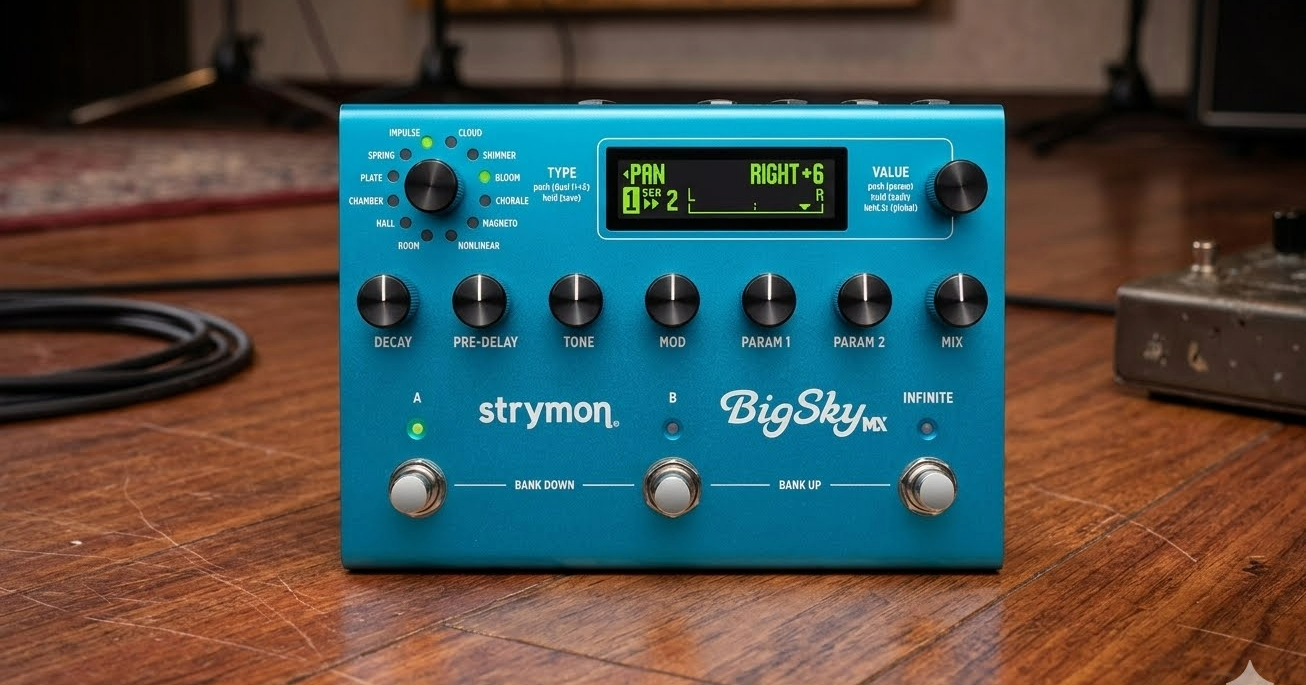
The digital revolution continued strongly, and I built and rebuilt my pedalboard with the latest digital reverbs and delays. My trusty Boss pedals got replaced with boutique pedals (noting that I still highly recommend Boss to this day). The Strymon BigSky and then the BigSky MX took everything I loved about the Boss RV-3 to a completely new level. This was further enhanced with my modern tube amp having an effects loop, allowing reverb to be applied after the preamp and before the power amp (thank you Friedman).
Strymon’s El Capistan also replaced my Boss DD-5. I learned that I love the sound of tape delay, needed for nothing more, and this pedal beat anything Boss or Line 6 had to offer. It was more compact than the Line 6 DL4, more reliable, and could still make those spaceship sounds. To my ears, the biggest advantage with the El Capistan is that it mixes the delay repeats with a fully analog dry signal. This is a huge advantage for subtle delays, allowing the delay to live on top of your sound, rather than taking over. Another favourite to mention is the Universal Audio Golden Reverb—the first reverb pedal I’ve heard that replicates properly the distinct sound of an analog reverb tank.
I did try pretty much every version of the Helix with high hopes. I found the full Helix too large, and the smaller HX versions too small to replace my pedalboard. The overdrives and fuzz sounds had come a long way; however, they still did not match my analog versions.
This all changed when I bought the Quad Cortex. The key that made the QC a contender was Neural Capture. This allowed me to capture my favourite drives and fuzzes with eerily close accuracy. I’m sure the new Helix Stadium has equally excellent capturing features (not present on earlier models when I bought the QC), and I’m sticking with the QC as I love the form factor.
III. The Hybrid Pedalboard
So do I still use my pedalboard, or has it been replaced with my Quad Cortex?
At home my pedalboard still reigns supreme. As good as the delays, reverbs, and captured drives/fuzzes in QC are, I still prefer Strymon and Universal Audio for delay/reverb, and my analog pedals for drives/fuzzes. As important, changing physical knobs is still far easier than using the QC’s giant touch screen or excellent desktop app.
Live with a band, the Quad Cortex has definite advantages. It’s small, light, and covers every effect I need. I’ve used it live as a full modeler, pairing with a Fender Tone Master FR-12 for stage monitoring and sending its signal to front of house. The advantage became clear when I set up a preset for each song, with scenes for each effect change—far easier and less stressful than pedal board tap dancing (plus my pedal settings haven’t all changed on transport).
My favourite way to use the Quad Cortex and where I think it sounds best is hybrid mode. One approach is to use the QC as a pedalboard replacement in front of a real tube amp, still allowing an amp model signal to be sent to front of house via another output. Another fantastic approach is to bypass the tube amp’s preamp, and send QC’s effects and amp signal (without the cab) to the amp’s effects return. In this case, the front of house output includes the addition of the cab. As good as the QC’s drive/fuzz captures are, a favourite analog drive or fuzz in front of the QC makes for the ultimate hybrid rig.
“My favourite way to use the Quad Cortex and where I think it sounds best is hybrid mode.”
— K_SONIC
